
The Story Behind the Lederhosen and Dirndl
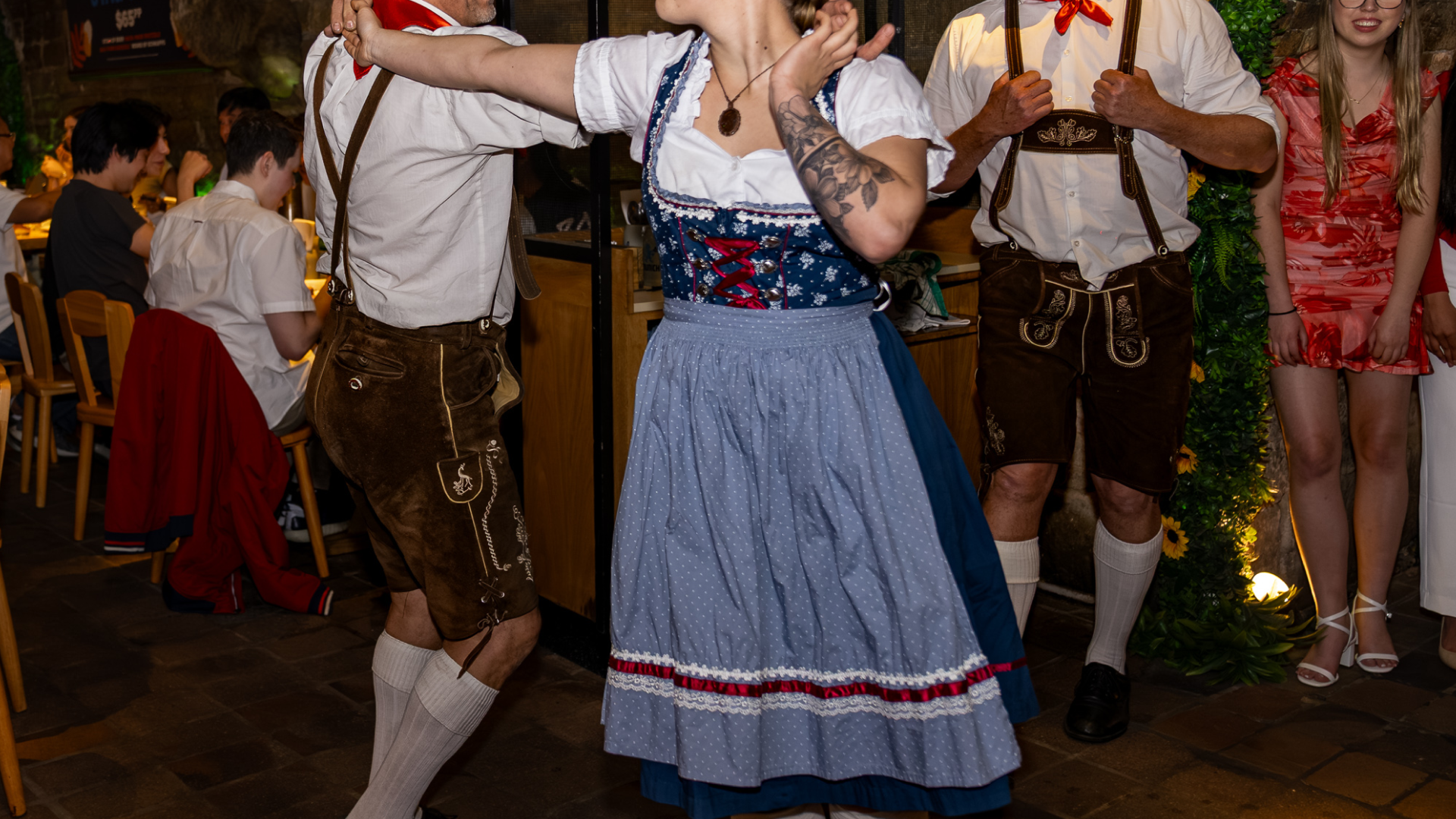
At Oktoberfest, we’re bringing out the traditional garb. But did you know there’s meaning stitched into every detail?
Lederhosen and Dirndls are both forms of Tracht: traditional dress shaped by the regions and communities that wore it. Cuts, colours, fabrics, embroidery and accessories changed from valley to valley, making clothing part workwear, part calling card.
Leather Built to Last
Lederhosen literally means “leather trousers”, which is exactly what they are.
They were worn for farming, hunting and other outdoor work where ordinary fabric wouldn’t last long. Leather could handle rough ground, changing weather and years of wear. Embroidery, buttons and the shape of the front flap added regional character to all that practicality.
Today, they’re more likely to face a crowded bier hall than a day in the fields.
From Maid’s Dress to Main Event
The word Dirndl comes from Diernen, a term used for maids working on farms in 19th-century Bavaria and Austria.
Their clothing consisted of a blouse, fitted bodice, full skirt and apron. Early versions were plain and practical, made for cleaning, fieldwork and tending animals rather than making an entrance at Oktoberfest.
By the 1930s, the Dirndl had found a new audience. Visitors from the cities took the Alpine style home, swapping workaday fabrics for more decorative versions. What began as a maid’s dress became fashionable, festive and closely tied to Bavarian identity.
The Bow Does the Talking
The apron still comes with one particularly famous detail: where you tie the bow.
At Oktoberfest, a bow on the left traditionally means single. On the right, taken.
It’s a modern Oktoberfest convention rather than an ancient Alpine law, but it pays to know which message your outfit is sending across the bier hall.
From the Alps to Munich Brauhaus
Tracht has moved from fields and farms to festivals and dance floors, but the details still carry its history.
Every September, the Lederhosen come out, the Dirndls are tied and Munich Brauhaus fills with a little more Bavaria than usual.
Wear a little history to Oktoberfest. Book your table via link above.
Munich Brauhaus practises the responsible service of alcohol. Drink responsibly.



HUNTER STREET HOSPITALITY REWARDS
One membership. Many places and ways to feel welcome.
Complimentary to join. Exclusive menus, dining credit and curated experiences, across every Hunter Street Hospitality venue with benefits that begin the moment you sign up. Welcome to Hunter Street Hospitality Rewards.
You’re invited
Join now and receive a $25 dining credit towards your next visit T&Cs Apply.