
Tuna, Cut by Cut: A Guide to Japanese Maguro
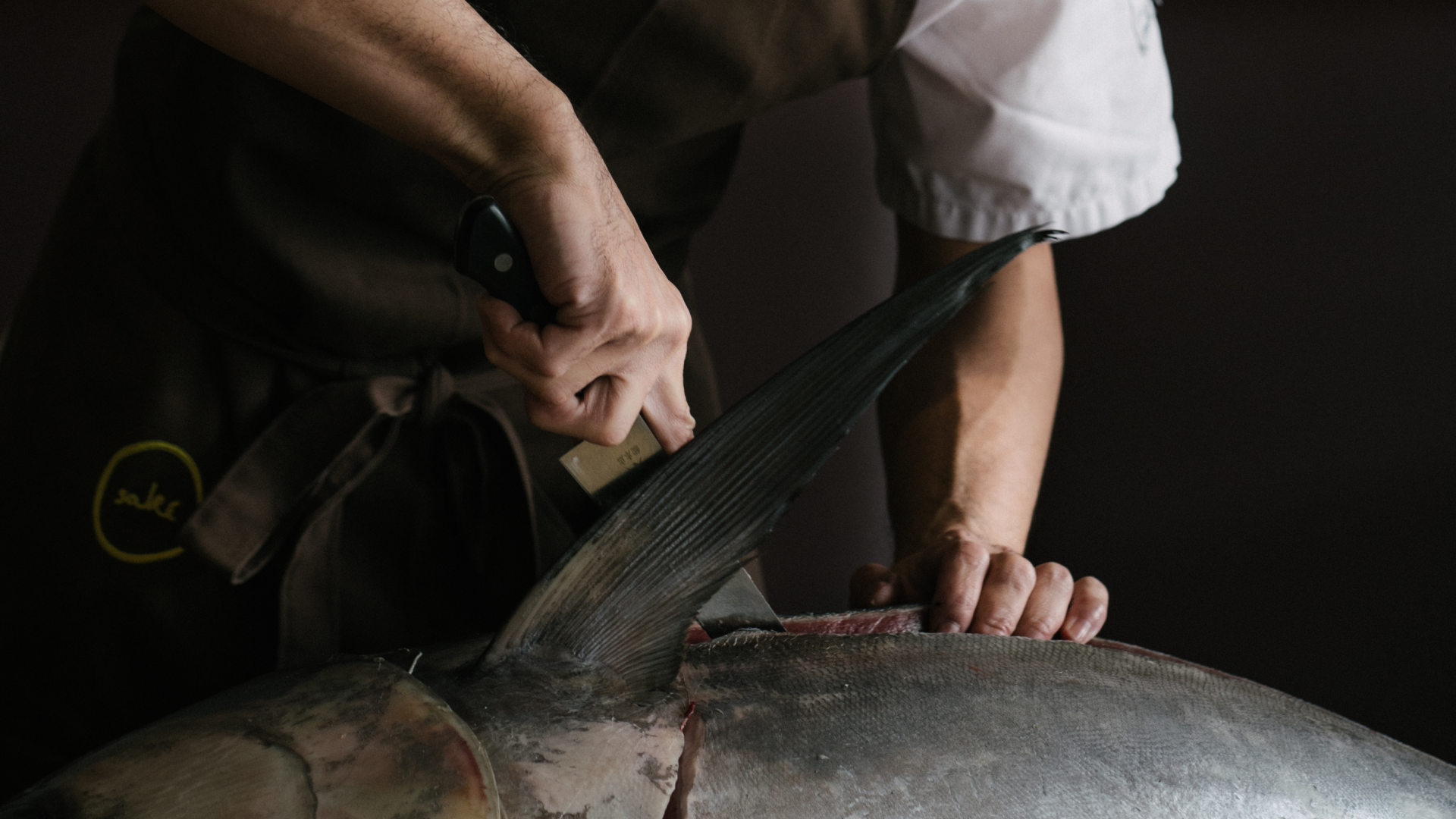
There’s more to Japanese tuna than meets the eye.
Known as maguro, tuna is divided into distinct cuts, each with its own balance of fat, texture and flavour. The difference comes down largely to where the meat sits on the fish and its fat content: leaner akami is found mostly through the back, while the belly yields much of the rich, marbled toro prized in sushi and sashimi.
Knowing the cuts means knowing a little more about what’s on your plate. Here’s where to start.
Akami: lean, deep and savoury
If you’re looking at a deep ruby-red piece of tuna, chances are you’re looking at akami.
Akami is the lean red meat found predominantly through the back of the fish. With less fat than the toro cuts, it has a firmer texture and a clean, savoury flavour with a distinctive mineral quality.
It’s also the most abundant of the three main cuts, making up much of the tuna itself. Its lean texture makes it particularly well suited to preparations such as sashimi, nigiri and zuke — tuna that has been briefly marinated in a soy-based seasoning.
Chutoro: the middle ground
Chutoro is the medium-fatty cut, found in both the belly and back of the fish. Its fine marbling brings more richness and softness, while retaining the deeper flavour and structure of lean tuna.
That balance is what makes chutoro such an appealing cut. You get the richness of fatty tuna without losing the character of the fish beneath it.
The exact boundary between akami, chutoro and otoro isn’t fixed. The cuts are defined by their position and fat content, and the transition between them is gradual rather than a perfectly marked line.
Otoro: rich, marbled and melting
At the richest end of the spectrum is otoro.
Found primarily in the belly towards the head, otoro is distinguished by its pronounced marbling and exceptionally soft texture. The high fat content gives it a buttery quality that begins to melt almost as soon as it hits the palate.
It is typically the most expensive of the three classic cuts, but that doesn’t necessarily make it the “best”. Akami, chutoro and otoro offer three very different experiences, and which one you prefer comes down to how you like your tuna: clean and savoury, balanced and rich, or intensely buttery.
Beyond akami, chutoro and otoro
For those who want to explore further, there are several lesser-known cuts that make use of parts of the tuna you may not expect to see on a sushi menu.
Kama-toro comes from the collar area behind the head and is prized for its rich, fatty meat. The broader kama, or collar, is also commonly cooked rather than served raw.
Noten is a rare cut from the top of the head, valued for its rich flavour and distinctive texture. Hoho, or cheek meat, comes from the cheek and has a more muscular texture than the softer belly cuts.
Then there’s negitoro. Unlike akami, chutoro or otoro, this isn’t a location on the fish. It refers to finely minced or scraped tuna, commonly served with negi (green onion) in sushi rolls or gunkan. It can make use of meat scraped from around the bones and other parts of the fish.
Why the cut matters
Japanese dining is grounded in this appreciation for exceptional produce and the craft that goes into preparing it. So next time you see maguro on the menu, take a closer look at the cut. It might tell you more about what you’re about to taste than the word “tuna” ever could.
Discover Japanese tuna at Saké.
Saké Restaurant & Bar practises the responsible service of alcohol. Drink responsibly.



HUNTER STREET HOSPITALITY REWARDS
One membership. Many places and ways to feel welcome.
Complimentary to join. Exclusive menus, dining credit and curated experiences, across every Hunter Street Hospitality venue with benefits that begin the moment you sign up. Welcome to Hunter Street Hospitality Rewards.
You’re invited
Join now and receive a $25 dining credit towards your next visit T&Cs Apply.